
Trimbakeshwar takes its name from Tryambaka, Lord Shiva himself. Here stands one of the twelve Jyotirlingas, unique because it embodies three faces in a single form – Brahma, Vishnu, and Mahesh. This sacred land is deeply intertwined with the presence of Shiva.
The Godavari originates right beside this temple on the Brahmagiri mountain. Moved by the intense penance of Sage Gautama, Lord Shiva released her from his matted locks. She descended to earth to become known as the Dakṣiṇa Gaṅgā (the Ganga of the South). At Trimbakeshwar, the holy river and the Jyotirlinga emerge from the very same sacred ground.
ॐ त्र्यम्बकं यजामहे सुगन्धिं पुष्टिवर्धनम् ।
उर्वारुकमिव बन्धनान्मृत्योर्मुक्षीय मामृतात् ॥
We worship the Three Eyed One, the fragrant nourisher of all. As a ripe fruit naturally detaches from its vine, may He liberate us from the bondage of death, leading us toward immortality.
(Ṛgveda 7.59.12- The Mahā Mṛtyuñjaya Mantra)
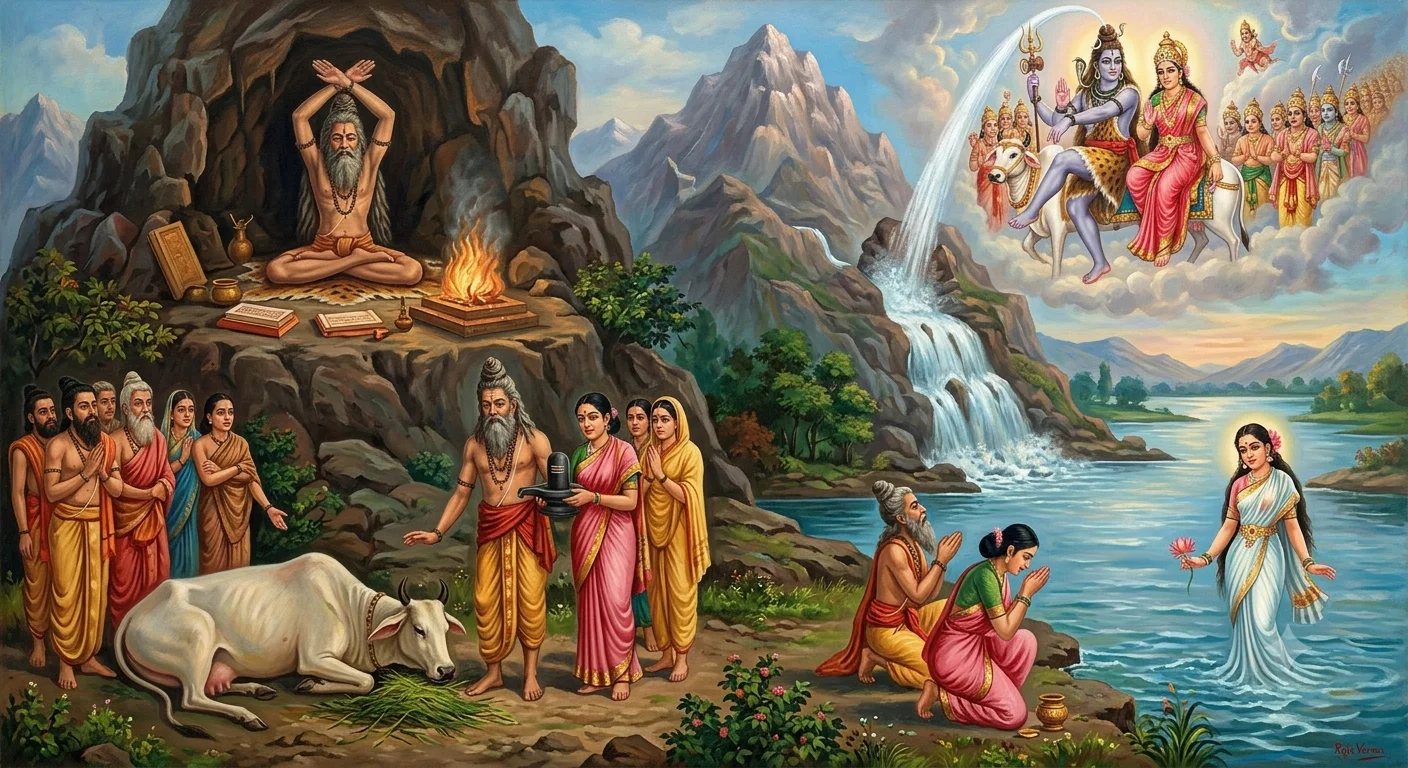
The history of the Kumbh traces back to the Samudra Manthan (the churning of the cosmic ocean), when the devas and asuras fought for the Amrit Kalash, the pot of immortality. Once the pot emerged, Jayanta fled with it across the sky to keep it safe, pursued by the demons. During this twelve-day divine chase, drops of nectar fell at four places on earth: Prayagraj, Haridwar, Ujjain, and Trimbakeshwar (Nashik). These locations became permanently blessed. Every twelve years, the Kumbh Mela returns to each of these four places in rotation, keeping the memory of that divine descent alive.
गोदावरी महापुण्या पापघ्नी मोक्षदायिनी ।
स्नानमात्रेण सर्वेषां पापराशिं विनाशयेत् ॥
The Godavari is supremely holy, the destroyer of sins, and the giver of liberation. By simply bathing in her waters, the accumulated sins of all beings are washed away.
The term Sinhastha comes from Simha Rāśi (the zodiac sign of Leo). When Guru (the planet Jupiter) enters Leo, the alignments in the sky mirror the exact cosmic position held when the Amrit first fell here. This specific astrological alignment occurs only once every twelve years, marking the period when Trimbakeshwar hosts the Kumbh.
This planetary movement, rather than a fixed calendar date, determines the timing of the festival. It is a moment where astronomy and earthly worship align.
सिंहस्थे च गुरौ पुण्ये गोदावर्यां जलेऽपि च ।
त्र्यम्बके जन्मनः पापं स्नानेनैव विनश्यति ॥
When Jupiter abides in Leo, the waters of the Godavari become incredibly auspicious. Bathing at Trimbakeshwar during this time dissolves the sins of a lifetime. (Skanda Purāṇa)
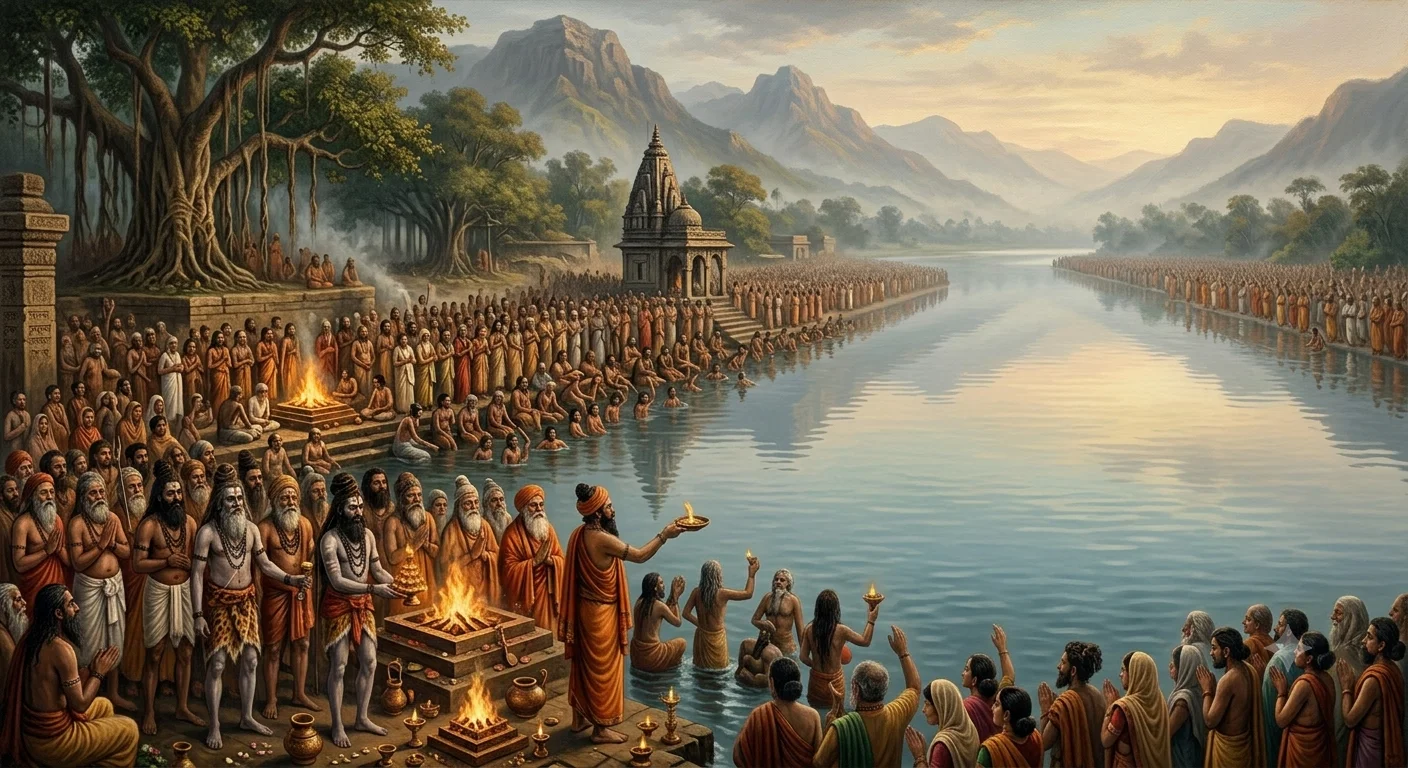
At the center of Trimbakeshwar lies Kushavarta Kund, where the Godavari gathers in her most concentrated form near her source. This is the exact spot where Sage Gautama performed his austerities. Today, it serves as the ground for the principal Shahi Snan of the traditional akharas and sadhus during the Kumbh.
Taking a holy dip at Kushavarta holds immense spiritual value, as it brings the pilgrim closest to the origin point of the sacred river.
कुशावर्ते च तीर्थे च स्नात्वा मोक्षं प्रयच्छति ।
त्र्यम्बकेश्वरदर्शनात् पुनर्जन्म न विद्यते ॥
Bathing at the sacred Kushavarta Teertha grants liberation. By having the Darshana of Lord Trimbakeshwar, one is freed from the cycle of rebirth.
For centuries, the Kumbh at Trimbakeshwar was held in one location, with both Vaishnava and Shaiva sadhus bathing together at Kushavarta. In 1789, following clashes between the two groups over traditional precedence, the Peshwa administration divided the mela. The Vaishnava sadhus moved to Ramkund in Nashik city, while Trimbakeshwar remained the exclusive seat for the Shaiva akharas. This division expanded the festival across two distinct, sacred centers along the same river.
Millions of pilgrims gathered for the last Sinhastha in 2003–04. The next cycle returns as Jupiter enters Leo, with the festival starting in October 2026 and continuing into 2027. The ancient river remains, ready to receive the millions who will come to her banks.

(नोंदणी क्र. F-352, धर्मदाय आयुक्त, नाशिक)
✦ भाविकांसाठी महत्त्वपूर्ण सूचना ✦
सनातन वैदिक परंपरेचे अधिष्ठान असलेल्या श्री क्षेत्र त्र्यंबकेश्वर येथील धार्मिक विधींचे पावित्र्य, शास्त्रोक्तता व पारंपरिक स्वरूप जपणे हे आपले सामायिक कर्तव्य आहे. भाविकांच्या श्रद्धेचा व वेळेचा आदर राखून,मोजक्या शब्दांत पुढील सूचना :
१. श्री क्षेत्राची परंपरा : श्री क्षेत्र त्र्यंबकेश्वरच्या प्राचीन पौराणिक व पारंपरिक वारशाची दखल मा. सर्वोच्च न्यायालयाने घेतलेली असून, न्यायालयाच्या निर्देशानुसार पुरोहित संघ (नोंदणी क्र. F-352, धर्मदाय आयुक्त, नाशिक) यांच्या प्रतिनिधीचा श्री त्र्यंबकेश्वर देवस्थान न्यासाच्या विश्वस्त मंडळावर विश्वस्त म्हणून समावेश करण्यात आलेला आहे. या पारंपरिक व्यवस्थेचा आदर राखून भाविकांनी धार्मिक विधी पुरोहित संघाशी संलग्न अधिकृत स्थानिक पुरोहितांकडूनच करून घ्यावेत.
२. पुरोहिताची ओळख : अधिकृत पुरोहितांची ओळख त्यांच्या पारंपरिक स्थानिक निवासस्थान, पूर्ण नाव, पुरोहित संघाचे अधिकृत चिन्ह, ताम्रपट व ओळखपत्राद्वारे करता येते. ते हॉटेल, रेल्वे अथवा बसस्थानकावर भाविकांना घेण्यासाठी फिरत नाहीत किंवा वारंवार दूरध्वनी करून आग्रह करीत नाहीत. मध्यस्थ टाळून थेट पुरोहितांशी संवाद साधावा.
३. आभासी प्रलोभनांपासून सावध : वेबसाइट, ॲप्स व सोशल मीडियावरील अल्प शुल्कात तात्काळ पूजा, अल्पावधीत जटिल विधी किंवा निश्चित फलप्राप्तीचे दावे यांपासून सावध राहावे. धर्मविधी हा बाजारू व्यवहार नसून शास्त्र, संकल्प, विधी व परंपरेवर आधारित पवित्र संस्कार आहे, कोणताही आर्थिक व्यवहार किंवा पूजा निश्चित करण्यापूर्वी संबंधित पुरोहिताची अधिकृतता पडताळून पाहावी आणि अनधिकृत व्यक्ती, संस्था व मध्यस्थांच्या भूलथापांपासून सावध राहावे.
(रजिस्ट्रेशन नं. F-352, धर्मदाय आयुक्त, नाशिक)
✦ भाविकों के लिए महत्वपूर्ण सूचना ✦
सनातन वैदिक परंपरा के अधिष्ठान श्री क्षेत्र त्र्यंबकेश्वर में धार्मिक विधियों की पवित्रता, शास्त्रोक्तता एवं पारंपरिक स्वरूप को बनाए रखना हम सभी का सामूहिक कर्तव्य है। भाविकों की श्रद्धा एवं समय का सम्मान करते हुए, संक्षेप में निम्नलिखित सूचना प्रस्तुत है :
१. श्री क्षेत्र की परंपरा : श्री क्षेत्र त्र्यंबकेश्वर की प्राचीन पौराणिक एवं पारंपरिक विरासत का संज्ञान माननीय सर्वोच्च न्यायालय द्वारा लिया गया है। न्यायालय के निर्देशानुसार पुरोहित संघ (पंजीकरण क्र. F-352, धर्मदाय आयुक्त, नाशिक) के प्रतिनिधि को श्री त्र्यंबकेश्वर देवस्थान न्यास के न्यासी मंडल में न्यासी के रूप में सम्मिलित किया गया है। इस पारंपरिक व्यवस्था का सम्मान करते हुए भाविक अपने धार्मिक विधि-विधान पुरोहित संघ से संबद्ध अधिकृत स्थानीय पुरोहितों के माध्यम से ही संपन्न कराएँ।
२. पुरोहित की पहचान : अधिकृत पुरोहितों की पहचान उनके पारंपरिक स्थानीय निवास, पूर्ण नाम, पुरोहित संघ के अधिकृत चिन्ह, ताम्रपट एवं पहचान-पत्र के माध्यम से की जा सकती है। वे भाविकों को लेने के लिए होटल, रेलवे अथवा बस स्थानक पर नहीं आते और न ही बार-बार दूरभाष कर आग्रह करते हैं। मध्यस्थों से बचकर सीधे पुरोहितों से संपर्क करें।
३. आभासी प्रलोभनों से सावधान : वेबसाइट, ऐप्स एवं सोशल मीडिया पर अल्प शुल्क में तत्काल पूजा, अल्प अवधि में जटिल धार्मिक विधि अथवा निश्चित फलप्राप्ति के दावों से सावधान रहें। धर्मविधि कोई व्यावसायिक लेन-देन नहीं, बल्कि शास्त्र, संकल्प, विधि एवं परंपरा पर आधारित पवित्र संस्कार है। किसी भी आर्थिक व्यवहार अथवा पूजा का निर्धारण करने से पूर्व संबंधित पुरोहित की अधिकृतता अवश्य सुनिश्चित करें तथा अनधिकृत व्यक्तियों, संस्थाओं एवं मध्यस्थों के भ्रामक दावों से सावधान रहें।
(Registration No. F-352, Charity Commissioner, Nashik)
✦ Important Notice for Devotees ✦
Shri Kshetra Trimbakeshwar, rooted in the eternal Sanatana Vedic tradition, is a sacred pilgrimage centre. Preserving the sanctity, scriptural authenticity and traditional character of religious rituals performed here is a shared responsibility. Respecting the faith and time of every devotee, the following guidance is presented:
1. The Tradition of Shri Kshetra : The ancient Puranic and traditional heritage of Shri Kshetra Trimbakeshwar has been taken into consideration by the Hon’ble Supreme Court. Pursuant to the directions of the Hon’ble Court, a representative of Purohit Sangh, Shri Kshetra Trimbakeshwar (Registration No. F-352, Charity Commissioner, Nashik) has been included as a Trustee on the Board of Trustees of Shri Trimbakeshwar Devasthan Trust. In recognition of this traditional framework, devotees are advised to have their religious rituals performed only through authorised local priests affiliated with Purohit Sangh.
2. Identifying an Authorised Priest : Authorised priests may be identified through their traditional local residence, full name, official Purohit Sangh insignia, Tamrapatra (traditional copper-plate credential) and identity card. They do not approach devotees at hotels, railway stations or bus stations for pick-up, nor do they repeatedly make unsolicited calls. Devotees are advised to avoid intermediaries and communicate directly with the priest.
3. Beware of Online Misleading Offers : Devotees are advised to exercise caution regarding websites, mobile applications and social-media promotions offering rituals at unusually low fees, immediate performance of ceremonies, completion of elaborate rituals within unrealistically short periods, or guaranteed religious outcomes. A religious ritual is not a commercial transaction, it is a sacred observance founded upon scripture, sankalpa, prescribed procedure and tradition. Before making any payment or confirming a ritual, devotees should verify the priest’s authenticity and remain cautious of unauthorised individuals, organisations and intermediaries making misleading claims.